Thursday, March 04, 2021

There's No Escaping God's Releasing of His Judgement Vs. His Enemies -- Deuteronomy 32:34-43

[ photo: crosswalk.com -- check them out ]

Song of Moses - Part VII - God's Payback Time & Vindication -- Deuteronomy 32:34-43

In this passage, verses 34-44 of the Song, God speaks directly. The passage ultimately covers the vindication of God by God. It is addressed to the Israelites, even though at times it sounds like God is referring to the enemies of Israel (e.g. in verse 43). And indirectly, He may be -- because whether one is an Israelite idolater, or a heathen idolater, he is still an enemy of God's.

34. God tells us He is indeed "storing" up all these things -- His anger, His revenge. How long will he store them up? How much more godless could Israel have gotten in those days? How much more godless can we become today? We do not know the limits of God, but I assure you that from passages like these we know that He too has limits when it comes to this.

It is interesting that the text says these things are "sealed up in [His] treasuries". The NET Bible says "in [His] storehouses".

35. God says "vengeance is Mine". Period. There will come a time when Israel (and thus us) will slip so far that our calamity will be at hand. It is at this time that the things He has stored up for that time (His anger, His revenge), things He has prepared, will start coming at the Israelites (and thus us).  The NLT and the NET says "I will pay them back."

On these two verses (34 and 35), Matthew Henry writes:

[God shows] displeasure against their wickedness, which he takes notice of, and keeps an account of, v. 34, 35. "Is not this implacable fury of theirs against Israel laid up in store with me, to be reckoned for hereafter, when it shall be made to appear [or made clear] that to me belongs vengeance?' Some understand it of the sin of Israel, especially their persecuting the prophets, which was laid up in store against them from the blood of righteous Abel, Mt. 23:35. However it teaches us that the wickedness of the wicked is all laid up in store with God.

On verse 35, Chuck Smith adds this most interesting account:

That is the text that Jonathan Edwards used for his sermon, Sinners in the hands of an angry God. "Now unto me belongeth vengeance, and recompense; their foot shall slide in due time: for the day of their calamity is at hand, and the things that shall come upon them make haste." Jonathan Edwards in the sermon Sinners in the hand of an angry God, said, "That a sinner is like a man walking over a fiery pit on a icy plank. Your footing is so unsure at any moment you can slip into the abyss."
It was a very powerful sermon, one of the most classic sermons in the history of the church, I guess. Jonathan Edwards was nearsighted; he had written out the sermon and he read it holding it up close so that he could see it. And as he was reading this sermon to the congregation, the power of the Holy Spirit began to convict people so greatly that they began to crawl down the aisle, screaming out to God for mercy. You want to read something really chilling sometime read "Sinners in the hands of an angry God" by Jonathan Edwards. Oh, what a servant. It's really heavy duty. This is the text for that sermon.

36. But we are then provided with this verse, that says God will judge His people, and then He will have compassion on them, or change His mind about destroying them, when He sees that their strength is totally gone, and they have all but disappeared, either free men or in captivity. It is hard to fully understand what is meant here. Matthew Henry again tries to help us out:

He will [judge] in compassion to his own people, who, though they had greatly provoked him, yet stood in relation to him, and their misery appealed to his mercy (v. 36): The Lord shall judge his people,. that is, judge for them against their enemies, plead their cause, and break the yoke of oppression under which they had long groaned, repenting himself for his servants; not changing his mind, but changing his way, and fighting for them, as he had fought against them, when he sees that their power is gone. This plainly points at the deliverances God wrought for Israel by the judges out of the hands of those to whom he had sold them for their sins (see Jdg. 2:11-18), and how his soul was grieved for the misery of Israel (Jdg. 10:16), and this when they were reduced to the last extremity. God helped them when they could not help themselves; for there was none shut up or left; that is, none that dwelt either in cities or walled towns, in which they were shut up, nor any that dwelt in scattered houses in the country, in which they were left at a distance from neighbours. Note, God's time to appear for the deliverance of his people is when things are at the worst with them. God tries his people's faith, and stirs up prayer, by letting things go to the worst, and then magnifies his own power, and fills the faces of his enemies with shame and the hearts of his people with so much the greater joy, by rescuing them out of extremity as brands out of the burning.

37-38. Then back to chiding or scolding them via a means of ridicule, asking, "Where are their gods? Where is their rock of refuge? Who ate the sacrifices they offered? Let them rise up (since they're dead) to help you (God is talking directly to the Israelites and thus to us here). Hide in them," He mockingly advises.  And He alone is the one that can mock as the next two verses suggest.

39-40. God then speaks again of Who He is. There is no one beside Him. He gives life and He takes life. He wounds and He heals. No one can save anyone from His hand. He lives forever. Henry says He does this by way of an oath: "The divine sentence is ratified with an oath (v. 40): He lifts up his hand to heaven, the habitation of his holiness; this was an ancient and very significant sign used in swearing, Gen. 14:22. And, since he could swear by no greater, he swears by himself and his own life." God will indeed get His revenge as He explains in the next two verses.

41-42. In these two verses, God switches to what He can or would do. If He sharpens His sword and if His hand pursues justice, He will render vengeance on His enemies and will repay those who hate Him. His arrows will be drunk with blood and His sword will devour flesh. The NET says the Hebrew term שָׂנֵא (saneʾ, “hate”) in this covenant context speaks of those who reject Yahweh’s covenant overtures.

If there is anything we see in the world today, especially among many liberal and progressive leaders, is the fact they unequivocally hate God, often by hating everything that God stands for.  God say when the time is right, He will sharpen His sword and get His vengeance, repaying those that hate Him. And that's the bad news these leaders do not want to hear from Christians. And that's why they would prefer that we either shut up or be eliminated one way or another. And folks when we shut up, the Enemy loves it. God's Adversary is inching forward when we do that.

But as these verses tell us the ultimate revenge by God will be a terrible execution of justice. I want no part of it. 

43. Then Moses enters the Song again and is basically encouraging the Israelites (and us) that as God's people we can indeed rejoice. God will avenge us who remain true to Him. He will take revenge out on 'our' enemies and they will 'atone' for what they have done to His land and His people. (The NLT says, "He will cleanse the land for His people.)

Henry says, "in God's Israel there is a remnant whose end will be peace." Amen. 

A judgment day is coming for us all. May I suggest you get to know the Judge now, as well your Advocate.

Note to reader: If you like the way we are studying scripture, why not subscribe to our posts by providing us just with your email? You can do that to the right of this column in the "Subscribe to" section.  You can also search our earlier studies in the "Blog Archive" section below that.  Finally, please encourage others to study along with us by sharing this link with your family and friends. Thank you and God bless.  Ken G.  

It would be great if you would share your thoughts or questions on this blog in the comments section below or on social media.

Tuesday, March 02, 2021

Song of Moses - Part VI - God Aches for Our Lack of Wisdom & Foresight -- Deuteronomy 32:28-33


[ photo: freepik.com -- check them out ]

Song of Moses - Part VI - God Anguishes Over Our Foolishness -- Deuteronomy 32:28-33

This is a passage that does not get a lot of help from the commentators but I believe there's a lot there for us to consider and digest. In it, God, through Moses, is continuing to express His disappointment and amazement at how sinful Israel could be and shares the explanation for their behavior. As we study this, we need to be aware that as we sin against God, we too disappoint Him. We can each ask ourselves if what He said about the Israelites could well apply to us today.  Let's look at the passage verse by verse.

We need to note that God finished speaking at the end of verse 27 -- note the double closing quotation marks. So this passage is Moses speaking, inspired by God, and speaking for God.

28. The Israelites are lacking (or perishing) in counsel (or wisdom). That is to say, they are without any good counsel or they're getting too much of the wrong counsel from somewhere they shouldn't. They have no understanding in them. They just don't get it.

As a former counsellor and marriage mentor, I can think of many situations where I would often say to myself, "This person is hellbent on doing something stupid; I wonder where their head is really at; or I wonder who's been giving them this foolish advice." Well, the truth is that I often knew the answer to that question. Sometimes it was their mate, sometimes it was their involvement in things that weren't Christian, or listening to friends or family that weren't Christian, but it sure wasn't God or His Word. Those are the only two sources that count when it comes to advice for living the godly life. Yes, we may listen and should listen to sound counsel from others and often to even pursue it as they may well help us see things differently, but any counsel we receive should be held up to the light of God's Word.

29. And oh how God wishes that the Israelites (and us) were wise. How He wishes that we would consider our futures if we don't repent and love Him deeply and sincerely. This is Moses through and through -- that is his dying wish as well for his people.

How awesome is that. That the Almighty God aches for us, like a loving father, wanting us to be wise and to think of our future end if we were to continue down the road we are continuing. Have you ever had a child that wanted to go his/her own way and you wanted so much for them to be wise, to think seriously about their future if they took that path? If so, you know what that feels like as a parent. That's how God feels when we fail to even apply real logic to the merits of our decision.

30. Moses is again presenting the evidence and saying the Israelites have had great successes fighting their enemies against all odds, except that God was the one who delivered (or sold) their enemies into their hands.

Can you think of times in your life when you thought you were up a creek without a paddle and if it weren't for God, you wouldn't be reading this right now, or you'd be reading from jail, or goodness knows where? I can. Many a times my enemies were conquered not by me, but by my God. How did the Israelites forget that so often?  How do we forget that so often?

31. And then Moses says that the 'rock' upon which their enemies (and our enemies) rely on "is not like our Rock". And he goes on to point out that even the enemies themselves recognize that. (The reference here is to Exodus 14:25 during the chase of the Israelites by the Egyptians. God had caused their chariot wheels to swerve all over the place so they could not be easily driven, and the Egyptians said, "Let us flee from Israel, for the Lord is fighting for them against [us]."

Why do you think that our enemies are trying to defeat us now? Part of it is because they know we are not relying on God as much as we can because we are weak, we have succumbed to the material successes we think we have achieved. Another reason is because they know that ultimately, they will be destroyed by the Almighty God that they fear.

32. Moses goes on to describe what characterizes the enemy. Their vine is from Sodom (you remember that city), and their fields from Gomorrah (and that one). Which makes their grapes poison and their clusters bitter.

Are those the places that we want to be associated with?  Are those the destructive ends that we want to have fall upon us?

Robert Jamieson says this on this verse: "This fruit, which the Arabs call "Lot's Sea Orange," is of a bright yellow color and grows in clusters of three or four. When mellow, it is tempting in appearance, but on being struck, explodes like a puffball, consisting of skin and fiber only." If we go after that fruit, we end up with nothing good and most likely finer in our faces. 

33. Their wine Moses says is like the venom of snakes and the deadly poison of cobras. You cannot escape it on your own.

Is this the kind of death that we, too, want?  Not for me thanks. But look, this isn't just about death --it's about how a real loving God as our Father gives His children freewill and how He hurts when we choose wrongly. Yet, He stays strong letting us suffer the consequence because He is a just God and a Holy God. Which is to say He can't abide with our idolatry, our sin. But that's not the end of the story. This same God who is Just, hates sin, but loves us -- provides a way out of the dilemma for us. He gives us Jesus Christ. You know the rest.

Note to reader: If you like the way we are studying scripture, why not subscribe to our posts by providing us just with your email? You can do that to the right of this column in the "Subscribe to" section.  You can also search our earlier studies in the "Blog Archive" section below that.  Finally, please encourage others to study along with us by sharing this link with your family and friends. Thank you and God bless.  Ken G. 

It would be great if you would share your thoughts or questions on this blog in the comments section below or on social media.

Monday, March 01, 2021

Song of Moses - Part V - God's Anger Expressed But Cut Short -- Deuteronomy 32:23-27

[ photo: cbs news ]

Song of Moses -- Part V -- God's Grace Checks His Anger --  Deuteronomy 32:23-27.

In these verses, and through the inspired Song of Moses, God continues to express His anger towards His children who turn to other gods. It's an interesting passage. It sounds violent and it is. But it is no less horrendous than what He is trying to address -- the idolatry of Israel, and by implication, our own idolatry today.

23. Misfortunes are guaranteed for the unfaithful. God's arrows will be directed at them (and us).

24. Famine, plagues, bitter destruction, the teeth of beasts, and venom of crawling things will come their way.

25. Outside their cities, war will cause great bereavement; inside their cities young and old men, virgins, and babies will be terrified.

And you have to love these next two verses.  God says:

26. He would have cut the Israelites to pieces and removed them from the memory of all other men (not just from His memory).

27. But He won't say that, and He certainly didn't do that because He did not want their enemies to claim that they were responsible for their extinction and not God.

What a passage. Chuck Smith has an interesting perspective on it: "I personally feel that this is a prophecy of the holocaust in Germany. And the being burned in the ovens in Germany was predicted in this song. And when their trouble came they were to sing this song, and if they would, it was to remind them of why the calamities befell them. Now so often today you talk to a Jew and you find he is an atheist because he will say, "Where was God when my parents or grandparents were burned in the ovens in Germany?" If they would have kept this song and sung this song, they would know why all the calamities befell them because they had forsaken God, and thus they had been forsaken by God."

Perhaps God's warnings are applicable to several stages of Israel's history. What is important for us is that we not miss the implication of the warning for us. I don't know if a more blatant description of God's anger is hidden elsewhere in Scripture. If so, I can't recall it right now. But I do know that God means business. And yet, as we saw in verses 26 and 27, His anger can, for different reasons, be held back. In this case, it was because He did not want to give occasion for the heathens to say they were the ones that did Israel in. In our case, it is His Grace that saves those that fully trust in Him. May it be so with you and me.

Note to reader: If you like the way we are studying scripture, why not subscribe to our posts by providing us just with your email? You can do that to the right of this column in the "Subscribe to" section.  You can also search our earlier studies in the "Blog Archive" section below that.  Finally, please encourage others to study along with us by sharing this link with your family and friends. Thank you and God bless.  Ken G.

It would be great if you would share your thoughts or questions on this blog in the comments section below or on social media.

Penury City -- A Trilogy by Thomas E.


 Penury City -- A Trilogy 

Author: Thomas E.

Publisher: Wounded Crow Publishing, Rochester, N.Y., 2016-2021

I recently reviewed each of this Trilogy's three volumes [you can catch those write-ups here, here2, and here3, respectively] but I feel so strongly about the general message of the series that I wanted to share my thoughts on the entire work.

Author Thomas E. is a devout Roman Catholic. He teaches Catholic doctrine for the Church and is not afraid to speak up on what is right with the church and what is wrong with it. More recently he penned an open letter to the Roman Catholic Church leaders, from Deacons to the Pope, because of his great love for the church. [You can read that Open Letter here4.] Thomas enjoys and accepts other Christians from non-Catholic churches. He enjoys talking theology and about his Lord with anyone who will engage him. And that's the very reason he wrote this trilogy in a way that would not only captivate our imagination, but more importantly help us, people of faith and people without any faith, to understand the possibilities of what lies ahead for us.

In this Trilogy, we not only have our eyes opened to what is going on in the world today, but also what we can expect in the next two or three decades. The backbone of his plot is based on a vision of the beginning of the End Days.

All three volumes are well written with lots of action, suspense and emotion. Mr. E. has a considerable liking for the supernatural and he applies it well, in the appropriate doses, and in a way that most of it, if it were necessary, could be backed up by what many believe is possible and is predicted in our sacred writings, and in Thomas's case, the Bible.

The story starts off in North America, and works its way miraculously to Europe where the major battle between good and evil is eventually fought.

A fellow reader, who does much more reading of fiction than I do, told me, after reading the series, that she sees some similarities in concepts also noticed in the writings of J.R.R. Tolkien's The Lord of the Rings (especially when Thomas introduces some evil creatures); Robert Jordan's The Wheel of Time (a cloak that hides one from the enemy and the ability to split one's sub-conscious into two in order to mentally pursue various aspects of what is going on in different places while remaining physically in another); and to Hannah Hurnard's Hinds' Feet on High Places (the idea of one  being taken on a difficult journey, and after arriving at their destination, being sent back in order to bring others there as well).

But best of all, it is a Trilogy of life and hope based on faith and obedience. It helps us understand that anything worth pursuing takes work and patience and perseverance, and in many cases total dependence on something outside of us, perhaps even Someone outside of time.

These books will make you think about why you are here, what you can expect (and ignore if you so wish), and how to conquer what really matters.  Highly recommended.

-- Ken B. Godevenos, Toronto, March 1, 2021.


It would be great if you would share your thoughts or questions on this blog in the comments section below or on social media.

Saturday, February 27, 2021

Song of Moses -- Part IV -- God's Strategy vs. His Sinful Children -- Deuteronomy 32:19-22

[ photo from musicformass.blog - check it out ]

Song of Moses -- Part IV -- How God Reacts To Our Sin --  Deuteronomy 32:19-22.

In the verses above this passage, Moses has just told us how the Israelites (and by us also being human, we too) have forsaken God. Now he tells us in this part of the Song of Moses inspired by God what God's reaction is. Let's take a look.

19. The verse says, "the Lord saw this". You cannot forsake God and turn to idols in your life thinking God won't notice. Forget it. That's a non-starter. And when He sees that, God did, does, and will, spurn us. The dictionary definition for 'spurn' is to reject with disdain or contempt. We can only find some comfort in the fact that God's love and grace towards those He loves, and those who love Him in return, does not allow this spurning to be eternal in nature.

He sees this as a "provocation (by) His sons and daughters", by us, and He puts on His "Father-hat". What would you or I do in a similar situation?

20. We are told here that He then hides His face from us, remains quiet, and sees where our folly will lead us. Parents do that when their children insist on doing something they should not. David Guzik says this, "When God's people forsake Him, He withdraws the intimacy of His presence. At first, this is sometimes seen as a relief, because the conviction of sin is not so great. But then the darkness and desperation sets in."

This also reminds me of need for "tough love".  As parents or a spouse that has been cheated, we may like God withdraw the intimacy of our presence, but not our love. God, even in His anger, never withdrew His love for His people and He is not going to start now wth you or me.

He stays behind the curtains and watches where things lead. The text actually says "what our end shall be". And it won't be pretty because we "a perverse generation". Yet we are His "sons" although we have stopped being faithful to Him. Matthew Henry comments on this: "They were faithless, and a people that could not be trusted. When he saved them, and took them into covenant, he said, Surely they are children that will not lie (Isa. 63:8); but when they proved otherwise, children in whom is no faith, they deserved to be abandoned, and that the God of truth should have no more to do with them."

21. We have made Him jealous by turning to gods that are not God. We have used idols to provoke Him to anger (knowingly or unknowingly). So what is His reaction?

The text says, "He will make us jealous with those who are not a people of God."  He will provoke us to anger with a foolish nation. Now that requires some digging into. Robert Jamieson provides this assistance: "that is, [those nations] not favored with such great and peculiar privileges as the Israelites (or, rather poor, despised heathens). The language [also] points to the future calling of the Gentiles."

Matthew Henry says this refers to those nations which will give them trouble in the years ahead after they entered into the Promised Land and thus agrees with Jamieson's first option above. But he also points out that Jamieson's reference to this being a future application with respect to the Gentiles also has merit as he writes:

"But the apostle [Paul] applies it to the conversion of the Gentiles, who had been a people not in covenant with God, and foolish in divine things, yet were brought into the church, sorely to the grief of the Jews, who upon all occasions showed a great indignation at it, which was both their sin and their punishment, as envy always is, Rom. 10:19."

22. For God to react in this way -- jealousy for jealousy, provocation for provocation, and anger for anger -- you can be sure of one thing -- He was and is royally ticked off, and that is exactly what the verse says when it speaks of "a fire" being kindled with respect to His anger, and it is so large and so hot that it burns down to Sheol or the nether world; consumes the earth; and sets ablaze the foundations of mountains.

I don't know about you, but I want no part of that response from God on me because of what I have done. 

Many people get to this point and say, "What's the use? If God is that mean, and I'm going to suffer an eternal punishment anyway, because I can't be perfect the rest of my life, then I don't need to curtail my life now for Him." What a mistake. What they miss out on is that God has made a way for each of us that will subside His anger, even extinguish it completely as He completely erases our sins. 

Note to reader: If you like the way we are studying scripture, why not subscribe to our posts by providing us just with your email? You can do that to the right of this column in the "Subscribe to" section.  You can also search our earlier studies in the "Blog Archive" section below that.  Finally, please encourage others to study along with us by sharing this link with your family and friends. Thank you and God bless.  Ken G.

It would be great if you would share your thoughts or questions on this blog in the comments section below or on social media.
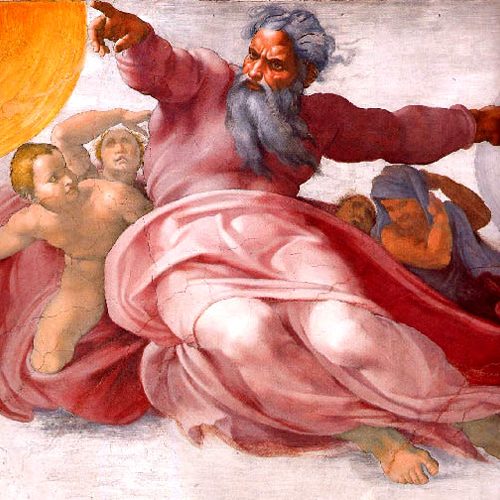
Friday, February 26, 2021

Song of Moses -- Part III -- Studying Deuteronomy 32:15-18, We Discover Abel Didn't Offer the First Sacrifice

[ a Sports Illustrated photo ]

Song of Moses -- Part III -- The Very First Sacrifice was not Abel's  --  our study Deuteronomy 32:15-18 continues.

Moses' song to Israel (and to us) continues.

15. Israel is referred to here as Jeshurun. According to Wikipedia, this is a poetic name for Israel used in the Hebrew Bible and it is generally thought to be derived from a root word meaning 'upright'. But Israel didn't stay that way. It became fat, thick, and sleek, and it kicked. Jeshurun (the personified name for Israel) didn't take long to forsake the God who made him. Jeshurun scorned the Rock that saved him.

How can we miss the application for ourselves? If we are honest and willing to face facts, we can't.  God is our Rock, He is our salvation. But as believers we have become fat. Maybe we're lazy or maybe we just have too much. We have become sleek - taking corners out of real worship and our commitment to obey His commandments, His direction of our lives, and even the basics when it comes to life (just think of many a Christian's view on abortion today). We individually, or perhaps as a family, or a church family may well have forsaken our God who made us and blessed us.

Let's go on and see what the rest of this portion of the Song has to say to us.

16. Israel made God jealous when they pursued and followed other gods. Did you ever stop to think that each time we pursue "another god" other than God -- be it sports, wealth, politics, sex, cars, entertainment, you name it -- by putting them ahead of God and His commandments and His presence with us, you and I are making God jealous. In many spots in Scripture, starting with Exodus 20:5, God tells us and warns us that He is a jealous God.

The rest of verse 16 here says that with our abominations (the practice of idolatry and immorality primarily) we have provoked Him to anger.

Many of us may have heard of the phrase "hell hath no fury like a woman scorned". William Congreve, an English author of the late seventeenth and early eighteenth centuries has a line in his play The Mourning Bride which gave us the proverb "no one is angrier than a woman who has been rejected in love".  Well friends, you ain't seen real fury until you have seen or felt the fury of our God when He gets jealous and stays jealous because we have not repented of our sin of going after other gods. He may take time to get His revenge, but He will. The only thing that holds it back often is His love for you and me because He loves us so much that He so desperately wants us to ultimately seek His forgiveness and hopefully never stray again.

17. We have sacrificed to demons who were not God, and we didn't even know those demons and gods as they are new and continue to be new with the age. They are gods that our ancestors could not even imagine. I can't say enough about this -- whether we make sacrifices to other gods as the ancients did or whether we live to serve other gods (see below) as we do today -- we are sacrificing to demons.  Think of that next time you put someone or something ahead of God. Let me be clear and use an example. There is nothing wrong with playing hockey or enjoying it -- it's a great sport, good exercise, and can teach us a lot. But when we put hockey ahead of our responsibilities and affection for God, we are sacrificing to demons.  (You pick your own example -- ask God, He'll provide some more relevant to your life.) The apostle Paul makes that abundantly clear in I Corinthians 10:20 where he writes to us, 

"No, but I say that things which the Gentiles sacrifice, they sacrifice to demons and not to God; and I do not want you to become partners with demons."  You don't want to be part of that. It's time to make some real hard choices about how we live.

Wow. Does that ever hit home today. First of all, think of who it was that constituted 'sacrifices' in the beginning. Many of us have always been taught to believe that the first record of sacrifices in the Old Testament came in Genesis 4:4 when after Cain offered God the fruit of the ground, Abel then presented a sacrifice of the flock to God.

I was recently led to an earlier verse. Take a look at Genesis 3:21. This takes place after Adam and Eve had sinned. It reads, "And the Lord God made garments of skin for Adam and his wife, and clothed them." Guess what, I believe God had an animal killed or sacrificed to make those coats and to cover the first sinners, who were also His beloved creations. He instituted the concept of sacrifices, no one else.  The rest are just copycats and evil at that. You can read much more about this here from the Abide in Christ website. God's Grace provided a sacrifice for Adam and Eve.  And God's Grace provides a sacrifice for you and I in the person of Christ Jesus.

So for us to offer sacrifices to other gods is indeed a humongous insult to God. Matthew Henry calls it a great affront to God. Yet we do it with our time, our money, or love, and our bodies. And we do it in ways that our parents and grandparents never knew off -- our cellphones, our tablets, our drugs, our gyms, our entertainment, our sports and much more. When we put any one of those things above our service for God, our worship of God, and our time and companionship with God, we are sacrificing to other gods.

18. And in doing so, we don't just invite God to come along. No, the Scripture here actually says we "neglect God" who created us and forget that He and He alone made it possible for us to have breath and life. Are you neglecting God today?

Whoever thought we would get this much out of the Song of Moses? And we've only just begun. But here's the question for you and I today: Have we forsaken our Creator? Have we worshipped or are we worshipping other gods? Do we really want to have to deal with God's jealousy? Can we really withstand His ire or fury?  I hope not. And in case we have, I hope we know what we need to do.

Note to reader: If you like the way we are studying scripture, why not subscribe to our posts by providing us just with your email? You can do that to the right of this column in the "Subscribe to" section.  You can also search our earlier studies in the "Blog Archive" section below that.  Finally, please encourage others to study along with us by sharing this link with your family and friends. Thank you and God bless.  Ken G.


It would be great if you would share your thoughts or questions on this blog in the comments section below or on social media.

Wednesday, February 24, 2021

The Zealots Return -- Volume III of the Penury City Trilogy


Penury City: The Zealots Return -- Volume III


Author: Thomas E.

Publisher: Wounded Crow Publishing, Rochester, N.Y., 2016-2021

This is the third of a three-volume trilogy by Thomas E.  My reviews of Volume I, can be accessed by clicking Light of Gabriel and of Volume II, by clicking on The Ire of the Shekel. In essence, the author, a devote believer in God, describing in very exciting terms and actions, and using a formula that comprises the Bible, the Church, history, current events, various writing techniques, delivers a thrilling story to his readers. I can't leave out travel via 'treetubes' but you'll need to discover that for yourselves. If you like fantasy, military escapades, spiritual battles, and character-development in a story, this series and especially Volume III, is your book.

Here is where Thomas takes all the unfinished details and explanations, the incomplete business, the failed relationships, and brings them together in a grand finale in a way that didn't allow me to put the book down until I finished it.

The message is clear. It's a terrible world we currently live in. The battle between good and evil has begun. The Enemy of the Good is strong. The Good are weak. And we're stubborn, without faith, and without love. We don't understand the Power available to us to fight Evil if we were to be serious about it.

But how do we move forward to the point where we can see what must be done without giving up? How do we take our eyes off the suffering you are experiencing and relabel it as a lesson that will prepare us for ultimate success?

Thomas pulls no punches. He identifies the Enemy as those who have turned away from the Creator. Their anger and misery are focused on one thing and one thing alone -- to destroy anything and anyone that is associated with God.

The lessons throughout the book continue to be as many in this Volume as they were in Volumes I and II. But the author takes us deeper here introducing a number of very serious theological topics of interest to those who want to be victorious. One excellent example is how we deal with evil that comes our way. One character says, "Whatever evil might come upon us, we must remember that it needs God's permission to act upon us, and God always has our best interest at heart. Fear not." Can you imagine just how different our lives would be, and how we would face the challenges we encounter if we really believed that?

Another key lesson for a believer is to learn, when he/she reaches a decision point, a fork in the road, or a desire to do something, that he/she should "stop moving for a moment, to take note of [his/her] heart and to ask permission for what [he/she] is to do next."  That would save us a lot of trouble.

But lest the reader of this review think it is a totally solemn book, let me assure you it is not. There is a lot of banter back and forth, some pranks, and a considerable amount of humor in its pages. There is one particular line I know I intend to use myself. It is this: "General, in a world gone mad, sometimes all that is left is to send [in] crazy." And send in 'crazy' they do.

This is a book that helps us all realize the reality of the direction the world is heading in, and the destination it is headed for. We have so accustomed ourselves to ignore the indications of evil that we know are present all around us, and focus instead on anything that could fill any void that we sense in our hearts and souls. But Thomas doesn't leave us there. He gives us answers. Admittedly, he presents those answers in a literary style that requires us to suspend our disbelief, something that I found difficult being a reader of primarily non-fiction. His characters and their actions are, for the most part, grounded enough in reality and possibility as we understand it today. Anything in the story that is supernatural in nature is also made to seem possible for us given the fuller explanation of God's realm, the spiritual world, which Thomas provides.

To the unbeliever and the skeptic, this book will give you great insight into what it really means to be a Christian and what is ahead for all us in the world. To the believer, this book is meant to give us a glimpse as to how to become a stronger person of faith and how to put that strong faith to use for your God. To all of us, it provides not just how we may get rid of our guilt of past sin; but also a purpose for the present; and a hope for the future. The Enemy can definitely be defeated. Death can be conquered. Love and Peace can reign.

Highly recommended.


It would be great if you would share your thoughts or questions on this blog in the comments section below or on social media.

Song of Moses -- Part II -- Deuteronomy 32:8-14

Song of Moses -- Part II -- How God Treated His People -- Deuteronomy 32:8-14


After shaming the Israelites and us, by asking "how we could possibly turn against a God like ours?" Moses now continues to describe in some details God's relationship with mankind. (Again we will use the pronoun 'us' wherever applicable as we believe there is much for us in this Song as there was for the Israelites when it was first given to them. The numbers refer to the verses in chapter 32.)

8. One interpretation of this verse is that God set up the twelve tribes neatly in the Promised Land and just outside it with their inheritance, in accordance with their desire and their numbers.

Robert Jamieson, however, prefers to believe this refers to something much more and much earlier when he writes, "the division of the earth, which Noah is believed to have made by divine direction ( Gen 10:5 Deu 2:5-9 Act 17:26, 27 ), Palestine was reserved by the wisdom and goodness of Heaven for the possession of His peculiar people and the display of the most stupendous wonders."

Matthew Henry seems to agree with Jamieson. He writes:

"When the earth was divided among the sons of men, in the days of Peleg, after the flood, and each family had its lot, in which it must settle, and by degrees grow up into a nation, then God had Israel in his thoughts and in his eye; for, designing this good land into which they were now going to be in due time an inheritance for them, he ordered that the posterity of Canaan, rather than any other of the families then in being, should be planted there in the mean time, to keep possession, as it were, till Israel was ready for it, because those families were under the curse of Noah, by which they were condemned to servitude and ruin (Gen. 9:25), and therefore would be the more justly, honourably, easily, and effectually, rooted out, when the fulness of time should come that Israel should take possession."

And then Henry goes on to say that way back then, God also had in mind how he would place the twelve tribes in that land when the appointed time came. All of this continues to point to the infinite wisdom of God . . . from the beginning.

9. God's inheritance is the totality of His people, all those that came from their father Jacob to whom the promise of an inheritance was given.

10. God took care of the Israelites in the desert, protecting them and caring for them just as He would guard "His own eye". The phrase describing the barren land as "a waste howling wilderness" is a common Oriental expression for a desert infested by wild beasts.

11. He was and is like an Eagle hovering over its young, catching them when they are falling, and carrying them safely to the nest.

We have to remember that the mother eagle, because she loves her little eaglets, knows that for them to survive, they need to learn how to fly. And for them to do that, when the time comes, she needs to basically throw them out of the family nest. And then she watches them. She watches them struggle to survive and when she detects they are about to hit the rock below them, she swoops in and saves them. That's our God.

12. And during this time, the Israelites were only led by God. They had no foreign gods.

13. And God led the people to high places, He gave them the fruit of the fields to enjoy, and honey from the rock, and oil as needed. Robert Jamieson says "'The high places' and 'the fields' are specially applicable to the tablelands of Gilead."

14. He gave them curds from the cows, milk for the sheep, and meat from the lambs, rams, and goats, plus the best grains for bread, and the best grapes fo their wine.

What more could they ask for? That is what God was to them. This is what God is for us today.

David Guzik says this whole passage was to "both bring a greater conviction of sin, and to remind them of God's love and grace they could return to". If we are struggling and have been thrown out of our comfort zone may we look beyond our sin after we are convicted of it, and recognize that our God is hovering over us, fully aware of our situation. May we trust in His great love for us and may we gladly allow Him to carry us to safety. Friends, we cannot do it alone. We need God and the people that He brings into our paths. The Enemy is fully at work now more than ever. This is no time for personal heroics.

Note to reader: If you like the way we are studying scripture, why not subscribe to our posts by providing us just with your email? You can do that to the right of this column in the "Subscribe to" section.  You can also search our earlier studies in the "Blog Archive" section below that.  Finally, please encourage others to study along with us by sharing this link with your family and friends. Thank you and God bless.  Ken G.

It would be great if you would share your thoughts or questions on this blog in the comments section below or on social media.

Tuesday, February 23, 2021

The Song of Moses as Requested by God -- Part I -- Deuteronomy 32:1-7


[ photo: godshotspot.wordpress.com -- check them out ]

Song of Moses -- Part I -- Establishing Who God Is and What We've Done -- Deuteronomy 32:1-7

The Song of Moses (a Song of Instruction so called to distinction it from Moses' Song of Praise and Harmony in Exodus 15) describes in great detail the relationship between God and mankind, and in particular, God and His chosen people, the Israelites at the time they were about to enter the Promised Land. It is well written as both a reminder and a warning that needs to be taken to heart by Israel. For us, it provides incredible insight into God's thoughts, actions, and feelings. It also provides us with lessons we need to learn and observe today.  Here are the key points by verse number.

1. Moses is not just vocalizing this Song to the Israelites -- for he calls on the heavens and the earth to hear his words. Thus, this is a Song for us just as much as for Israel and as such we'll look at the words from our perspective wherever possible, using the pronoun 'us'. But he also calls on heaven and earth to be a witness against our failures and sins. Commentators describe both possibilities.

2-3. Moses intends the Song to be accepted as either refreshing or sweeping teaching for he is proclaiming the Lord's name and ascribing greatness to Him. Matthew Henry writes:

"It shall be a beating sweeping rain to the rebellious;' so one of the Chaldee paraphrasts expounds the first clause. Rain is sometimes sent for judgment, witness that with which the world was deluged; and so the word of God, while to some it is reviving and refreshing-a savour of life unto life, is to others terrifying and killing-a savour of death unto death. It shall be as a sweet and comfortable dew to those who are rightly prepared to receive it."

4. God is solid like a Rock who does perfect work; is totally just; faithful; and righteous.

5. But we have acted with corruption towards Him. We have not behaved like his children as we are a perverse and crooked generation. We note that we corrupted ourselves; God has not corrupted us -- He is the antithesis of corruption. And we did this says Henry via a "spirit of contradiction, and therefore would do what was forbidden because it was forbidden, would set up their own humor and fancy in opposition to the will of God, were impatient of reproof, hated to be reformed, and went on frowardly in the way of their heart."

6. Moses then calls us foolish and unwise, and asks if that is anyway for anyone to 'repay' God, who made, established and bought us. In light of that, it is indeed foolish of us to rebel against God. We have deserted God, not the other way around.

7. And then he tells us to remember our past. And in particular that we should remember in our own lives, how many times God's mercies were bestowed upon us.

So, what can we take from these first seven verses of Deuteronomy 32, the verse section of Moses' Song of Instruction?

May I suggest we reflect on three things:

a. God's characteristics,

b. God's record with respect to us,

c. and our foolishness and rebellion.

Dare I ask, "How dare we?" And yet that is what each of us should be asking ourselves.

Note to reader: If you like the way we are studying scripture, why not subscribe to our posts by providing us just with your email? You can do that to the right of this column in the "Subscribe to" section.  You can also search our earlier studies in the "Blog Archive" section below that.  Finally, please encourage others to study along with us by sharing this link with your family and friends. Thank you and God bless.  Ken G.

It would be great if you would share your thoughts or questions on this blog in the comments section below or on social media.

Monday, February 22, 2021

You Can't Walk This Road Alone


The Ultimate Decision that Has To Be Made

Penury City: Ire of the Shekel -- Volume II


Author: Thomas E.

Publisher: Wounded Crow Publishing, Rochester, N.Y., 2016-2019

This is the second of a three volume work by Thomas E. In Volume I we are introduced to a failed world, primarily in the U.S. It is a world that sadly can be described by many American cities today as well as by what many predict the rest of the U.S. and other other western countries may look like in the next few decades.  It is that world that a number of folks, some people of faith, some just fed up with what they are living through, seek a way out. Such a way is provided by a woman named Maria. But getting to that city that they believe is so different requires an incredible journey and a complete suspension of one's doubt in a spiritual world. You can read my review of Volume I here.

Volume II takes us through various tunnels, oceans, and wild events, sometimes being chased by the evil guards of the Enemy and barely escaping. At long last, all the intended pilgrims are united and embark on the last stretch of their voyage to the City they seek. Upon arrival, their reactions are as varied as they are. Some, especially our lead character in Volume II (Dr. Saul, the former abortionist who is simply along on the journey in order to catch up to his 'partner' and love interest, Janess) is totally disgusted at what he sees in the City they all nearly died to get to. He feels he was duped. One by one, the pilgrims are dealt with in accordance with their stage of faith, or lack thereof.

Saul has a lot of work to do and he is assigned to a much more accomplished believer and person of faith. To his dislike, his mentor is to be the very Sister that gave him a hard time on the voyage. Their relationship develops over the various chapters as Saul learns the lessons of faith with her help. Much to his surprise, he seems to have learned them all until he gets to the very last one -- one that requires a real 'leap of faith'. A leap that no human being could accomplish on their very own, and yet it seems there cannot be another human being that will help him achieve it.

This volume has a most surprising end. If you read it, don't spoil it for yourself. You have to ease into it. Thomas E's writing continues to be top-notch. I was truly riveted to the pages of the book as I reached the end.

As the reader moves through Volume I and now II, more and more becomes clear. Connections are cleverly made between characters that we had long forgotten. The author is also a master of 'allusion' as time and time again our minds are called to something that we may well have learned about in our lives, without mentioning it explicitly; an indirect or passing reference to things we may already have known.

Can some of the most heinous sins towards mankind be forgiven? By the victims? By God? Can I forgive myself? And if so, how does all that happen?

There were more memorable quotes through this volume. For instance, when one character tells another, "You are trying to calculate the behavior of God with the feeble mind of a human being." Each one has a lesson for every reader that wants to learn about God or develop a closer relationship with Him. Another one I liked was the response given by the mother of one of the characters when her brother tried to keep her from combat battle with the Enemy troops and told her that her place was with the children. She "responded that there would be no place for her children if there was no God in the world. She said she'd rather all would perish than live in a world without the One."

Thomas E. also gives us a great definition of 'love'. You can catch it in Chapter 6. He also maintains his ability to not pull punches -- people once again die as the narrator utters, "Evil is cold and has no remorse."

The level of excitement is high reminding me of the Indiana Jones and the Temple of Doom movie. The author explains how the evil powers are acting out of fear that their time is limited and one day they will have to answer for what they have done.

As I continue reading through this series over a number of days, I note that I find myself thinking about the world, the characters in the story, the future, and what we may well be facing in the days ahead. This is not a doomsday series, but rather one of hope. Goodness knows, the world will bring on its own doomsday. What we need to discover is how to avoid it. This series helps us do that.

I don't want to give the plot away. Suffice it to say that the excellent story is not over yet. The pilgrims have arrived at their destination. But what exactly is that destination? And is it the ultimate  destination? There are still some loose threads. There are still some ends (or beginnings) that we haven't grasped. With anticipation, I am picking up Volume III, The Zealots Return. I recommend you start with Volume I.

The Ire of the Shekel is highly recommended as an exciting, informative, and predictive work. Thomas E. accomplishes the task well.

-- Ken B. Godevenos, Toronto, Ontario.

It would be great if you would share your thoughts or questions on this blog in the comments section below or on social media.

The Saddening of Moses Just Before He Dies -- Deuteronomy 31:22-30

[ photo from goodseed.com -- check them out ]

Moses Gives His Last Order to Israel With Sadness -- Deuteronomy 31:22-30

Just prior to this passage, God had ordered Moses to write a song that Israel would remember when they forsook Him in the years ahead. This passage starts off by saying that Moses wrote that song, inspired by God, that very day. And he taught it to Israel. We find the song in the chapter after this one.

Here, however, in verse 23, Moses commissions Joshua, his replacement, as the leader of Israel, and tells him to be strong and courageous. Joshua, you will remember, was known for his servant's heart and attitude, feeling inferior to his master Moses, and doubting he could accomplish what Moses believed he could., David Guzik speaks to this:

"This was a manly way to speak to Joshua. God (and Moses) would not pander to Joshua's weak and timid nature. He didn't hear, "Oh Joshua, you're so wonderful." "Oh Joshua, you're so strong." "Oh Joshua, you're so courageous." Instead, he heard, "Now is the time. Step up to the challenge. Be strong and of good courage!" You shall bring the children of Israel into the land: Joshua, by nature weak and lacking courage, needed to hear this from Moses. He needed to hear, "You are going to do it. It is going to happen."

How many times with my own children, or even grandchildren, not to mention church leaders, have I felt that this is the very talking to they needed to hear? "Stop doubting. Start doing." We can all stand to hear that at times, I'm sure. While God is patient with us, every day that we delay carrying out His plan for our life, we are holding back the blessings related to that matter that God wants us to have.

The passage then tells us that after finishing the writing of the Law, Moses instructs the Levites to place the book of the Law beside the ark of the covenant where it was to remain there as a "witness against" them. The very phrase God used earlier in reference to the song that He asked Moses to write.

And then Moses echoes the words, knowledge, and feelings of God when he tells the Israelites that he knows they are rebellious and stubborn, even while he still lives, and that they will be much more so once he dies. (verse 27)  No wonder Joshua had to be encouraged having heard both from God and now Moses that the people he was about to lead would be so disobedient to God. Can you imagine being a pastor today of a group of people of which God has told you would sin so badly that God would be totally disgusted with them? And yet, I can only assume, knowing that we are all human, that this happens often. May such pastors have the wisdom to pray hard for their flock and may they have the boldness to warn them. And may we have the faith not to be those people.

Then Moses asks for all the elders and officers to be assembled together so they may hear his words (of the song that is coming) and that he could "call on heaven to witness against them". (verse 28)  Matthew Henry has this to say:

"It is probable that this was the very book that was found in the house of the Lord (having been somehow or other misplaced) in the days of Josiah (2 Chr. 34:14), and so perhaps the following words here, that it may be a witnessagainst thee, may particularly point at that event, which happened so long after; for the finding of this very book occasioned the public reading of it by Josiah himself, for a witness against a people who were then almost ripe for their ruin by the Babylonians."

Moses tells them how corrupt they will become after he dies, doing evil in God's sight, and provoking His anger. And with that, he spoke the words of the song.

Let us for a moment stop and think, once again, how Moses must have felt on that very day. During his life, he had witnessed the unfaithfulness of his people and he tells them that (verse 27). He knew them well. Matthew Henry points out that "Their rebellions against himself he makes no mention of: these he had long since forgiven and forgotten; but they must be made to hear of their rebellions against God, that they may be ever repented of and never repeated."

Now, having heard from God that their wickedness would be even greater after his death, this must have made him extremely sad. Henry continues,

"Many a sad thought, no doubt, it occasioned to this good man, to foresee the apostasy and ruin of a people he had taken so much pains with, in order to [make] them good and make them happy; but this was his comfort, that he had done his duty, and that God would be glorified, if not in their settlement, yet in their dispersion. Thus our Lord Jesus, a little before his death, foretold the rise of false Christs and false prophets (Mt. 24:24), notwithstanding which, and all the apostasies of the latter times, we may be confident that the gates of hell shall not prevail against the church, for the foundation of God stands sure."

It should be our prayer for ourselves, and for our brothers and sisters, and for our children and grandchildren, that we should never have to have a song remind us of our turning against God.

Note to reader: If you like the way we are studying scripture, why not subscribe to our posts by providing us just with your email? You can do that to the right of this column in the "Subscribe to" section.  You can also search our earlier studies in the "Blog Archive" section below that.  Finally, please encourage others to study along with us by sharing this link with your family and friends. Thank you and God bless.  Ken G.

It would be great if you would share your thoughts or questions on this blog in the comments section below or on social media.